Introduction
A car accident can turn an ordinary day into a stressful experience within seconds. Even a relatively minor collision may leave visible scratches, dents, damaged bumpers or misaligned body panels. More serious incidents can affect several areas of the vehicle and require a combination of bodywork, technical assessment and repainting.
Once the immediate safety concerns have been addressed, many vehicle owners face another challenge: understanding how the repair process works and what should happen before the car is returned to the road.
Professional accident repair involves much more than making damaged panels look attractive again. The vehicle needs to be assessed carefully, suitable repair methods must be selected, and the affected surfaces must be restored to an appropriate condition. Following manufacturer specifications is particularly important for modern vehicles, which use different materials and construction techniques.
For drivers in Wuppertal, Linge Lackierzentrum provides vehicle painting and accident repair services, covering everything from smaller bodywork damage to more extensive collision repairs.
The First Steps After a Collision
Immediately after an accident, personal safety should take priority over the condition of the vehicle. Drivers should check whether anyone is injured, move away from immediate danger where possible and contact the emergency services when necessary.
If the vehicle is involved in a collision on a busy road, it is important to remain aware of surrounding traffic. A damaged car should not be driven if its condition creates a safety risk.
Once the situation is safe, documenting the incident can help with the next stages. Useful information may include:
Photographs of the damaged vehicle from several angles.
Pictures of the surrounding accident scene, where safe and appropriate.
Details of the vehicles involved.
Contact information for relevant parties and witnesses.
Insurance and incident documentation.
Notes describing what happened.
Avoid attempting to push damaged panels back into position or carry out temporary repairs without understanding the extent of the damage. What appears to be a simple cosmetic problem may involve additional components underneath.
Why a Proper Damage Assessment Matters
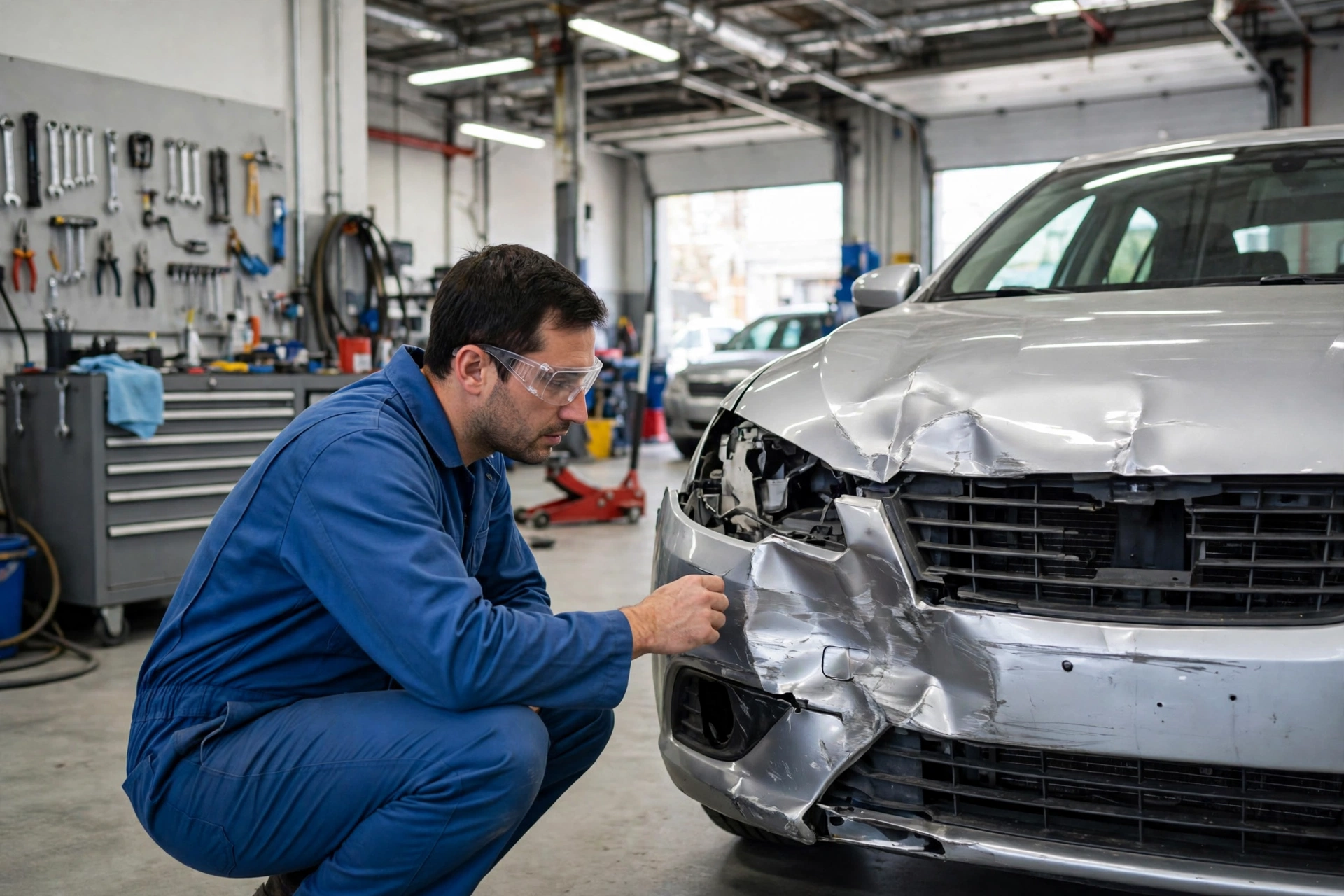
The first professional step is to examine the vehicle and determine the extent of the damage.
A collision does not always affect only the area where the impact occurred. For example, a damaged bumper may have additional damage behind its visible outer surface. Similarly, a dented wing or door may involve deformation around nearby mounting points or panels.
A careful assessment helps establish which parts require attention and which repair methods may be appropriate.
The inspection may consider:
Visible bodywork damage: Scratches, dents, cracks and deformed panels are identified and recorded.
Bumper condition: Plastic bumpers may have surface damage, cracks or deformation that needs further examination.
Panel alignment: Gaps between doors, wings, the bonnet and other panels can provide useful indications of deformation.
Paint condition: Scraped or damaged paint may require localised repair, blending or complete panel painting.
Structural concerns: More serious collisions may require additional checks to determine whether structural areas have been affected.
The exact inspection requirements depend on the accident and the vehicle. A professional assessment provides a more reliable basis for deciding what work is needed.
Understanding Different Types of Accident Damage
Not every collision creates the same repair requirements. The location, force and direction of the impact all influence the final condition of the vehicle.
Parking Damage
Parking incidents are among the common causes of minor vehicle damage. A driver may misjudge the distance to a wall, another vehicle or a low obstacle while reversing or manoeuvring in a restricted space.
Typical results include small dents, scratches and damaged paint around bumpers or doors.
Some of these defects may be suitable for localised repair, depending on their size and depth. A specialist should assess the damage before deciding whether Smart Repair or more extensive bodywork is required.
Bumper Damage
Bumpers are designed to form part of a vehicle’s protective structure, but they can still suffer visible damage during low-speed impacts.
Common problems include scratches, cracks, deformation and damaged mounting areas. A bumper may sometimes be repaired rather than replaced, but this depends on its condition and the manufacturer’s requirements.
The repair specialist must consider whether the damaged component can be restored appropriately or whether replacement is necessary.
Door and Wing Damage
Side impacts and parking collisions can affect doors, wings and surrounding body panels. Even a relatively small impact can leave a visible dent or disturb the alignment of adjacent components.
The repair approach depends on the material, the location of the deformation and whether the original paint has been damaged.
More Extensive Collision Damage
A serious accident can affect multiple panels and vehicle areas. In these cases, repairs may involve body alignment, panel straightening, replacement of selected components and extensive paintwork.
A detailed assessment is essential because the visible damage alone may not represent the complete repair requirements.
Repairing Damaged Panels Instead of Replacing Everything
One common misconception is that a damaged body panel must always be replaced. In many situations, modern repair techniques can restore an existing component without requiring a complete replacement.
The decision depends on several factors, including the severity of the deformation, the material, the accessibility of the damaged area and the manufacturer’s repair instructions.
Different techniques may be used during the process:
Spotter technology: Special tools can attach to a damaged metal surface to help pull selected areas outward and correct dents.
Pulling techniques: Controlled pulling force can help restore the shape of deformed panels. Depending on the situation, adhesive or welding-based methods may be used.
Straightening work: More significant deformation may require specialised equipment to bring damaged body sections back into the appropriate position.
Panel repair or partial replacement: If a section cannot be restored appropriately, replacing part or all of the affected component may be necessary.
The goal is not simply to make the vehicle look normal. The repair must also be technically appropriate for the vehicle’s construction.
At Linge Lackierzentrum, the accident repair service includes modern straightening and bodywork techniques. The workshop explains that preserving existing vehicle components can often be possible, depending on the damage and applicable manufacturer specifications.
Why Manufacturer Repair Specifications Are Important
Modern vehicles are built using a combination of materials and joining techniques. High-strength steel, aluminium components and specialised body structures can all require different repair procedures.
This means that a method suitable for an older vehicle may not be appropriate for a newer model.
Manufacturer repair instructions provide guidance on how particular components should be handled. They may specify suitable joining techniques, repair limitations and circumstances where replacement is required.
Depending on the vehicle, repair work may involve welding, riveting, bonding or partial component replacement.
Following the relevant technical guidance helps support the restoration of the vehicle’s structural integrity, stability and corrosion protection.
It is also important to avoid assuming that every dent can be repaired using the same technique. A qualified specialist should consider the vehicle’s material and construction before beginning the work.
Restoring the Paintwork After Body Repairs
Once the bodywork has been repaired, attention turns to the painted surfaces.
An accident can remove paint, expose underlying materials or leave scratches that cannot be corrected through polishing alone. The repaired area may therefore require preparation and repainting.
The process generally involves several stages.
Surface Preparation
The damaged area is prepared for painting. Depending on the repair, this may involve sanding, filling, smoothing and cleaning the surface.
Careful preparation is important because imperfections underneath the new paint can affect the final appearance.
Colour Matching
Vehicle paint colours are not always straightforward. Even vehicles with the same manufacturer’s colour code can show differences because of age, exposure to sunlight and previous refinishing work.
Computer-assisted colour measurement can help identify a suitable colour match. At Linge Lackierzentrum, modern colour measurement technology is used to support accurate paint matching.
Localised Painting or Complete Panel Painting
The extent of the damage determines how much of the vehicle needs repainting. Some repairs may require local paintwork, while others may need blending into adjacent areas or a complete panel repaint.
The objective is to achieve a consistent finish with suitable transitions between the repaired section and the surrounding original paint.
Final Inspection
After painting, the repaired area should be checked for colour consistency, surface quality and visible imperfections. This helps ensure that the work meets the intended standard before the vehicle is handed back.
How Does the Accident Repair Process Work?
A structured repair process helps vehicle owners understand what happens between the initial inspection and final collection.
At Linge Lackierzentrum, the accident repair process is presented in four main stages:
1. Damage assessment
The vehicle is examined, the damage is evaluated and the required repair measures are determined.
2. Bodywork
Damaged sections are repaired through appropriate straightening, dent removal or other bodywork techniques.
3. Painting
The repaired areas receive suitable paintwork, including colour adjustment and the use of appropriate materials.
4. Final handover
The completed vehicle undergoes a final quality check before it is handed back to the owner.
The actual duration depends on the extent of the damage, the work required and the availability of any necessary replacement parts.
What Should You Ask Before Authorising a Repair?
Before agreeing to accident repairs, it is worth understanding exactly what the proposed work includes.
A clear conversation with the repair provider can prevent confusion later.
Consider asking the following questions:
Which parts of the vehicle have been affected?
Can the damaged panels be repaired, or is replacement necessary?
Which repair techniques will be used?
Does the work follow the relevant manufacturer specifications?
Will the affected areas need repainting?
How will the original paint colour be matched?
What is included in the estimated cost?
How long is the repair expected to take?
If the insurance company requires a written estimate or an independent assessment, clarify which documents are needed before work begins.
Keeping copies of the estimate, repair approval and final invoice can also help maintain a clear record.
The Importance of Choosing an Experienced Repair Specialist
Accident repairs affect more than a vehicle’s appearance. The quality of bodywork, material handling and painting can influence the finished result.
A suitable repair provider should be able to explain the proposed work clearly and identify why a particular method is appropriate.
Look for relevant qualifications, experience with vehicle bodywork and a clear approach to repair procedures. It is also useful to ask whether the workshop follows manufacturer specifications and uses suitable colour-matching technology.
For drivers looking for professional repair of accident damage, Linge Lackierzentrum in Wuppertal offers accident repair for parking damage, bumper damage, door and wing damage, as well as more extensive collision-related bodywork.
The workshop describes its approach as a combination of body repairs, straightening techniques and professional painting. It also provides an opportunity to submit photographs of vehicle damage when making an initial enquiry.
A Proper Repair Is an Investment in the Vehicle’s Condition
After an accident, it can be tempting to focus only on the most visible marks. However, a good repair decision begins with understanding the complete damage and choosing a suitable technical solution.
Some dents may be repaired without replacing the original panel. Other situations require more extensive bodywork or replacement components. Paint restoration then helps bring the repaired area closer to the vehicle’s original appearance.
The right approach depends on the vehicle, the accident and the manufacturer’s repair requirements. A professional assessment makes it easier to understand these factors before work begins.
Whether the vehicle has suffered a small parking collision or more extensive accident damage, careful inspection and appropriate repairs can help restore its condition. By working with an experienced specialist and asking the right questions, vehicle owners can approach the repair process with greater confidence and a clearer understanding of what their car needs.